SLBA, Biennale Petits Formats.
First and foremost a working tool whose end goal is putting on an exhibition: more than a hundred artist records, cross-referenced data and tracking statistics, for an artists’ society in Lorient, its jury, its volunteer secretary and its graphic designer. Salon registration rebuilt end to end, from the photo an artist uploads to the file the designer opens.
Overview
The Société Lorientaise des Beaux-Arts brings painters, photographers, sculptors and printmakers together for a salon at the Palais des Congrès in Lorient. For the 2027 Biennale Petits Formats, each artist submits four works, a jury picks the ones to exhibit and the one that goes into the catalogue, and a graphic designer lays the catalogue out.
Everything runs through a registration site I host and maintain. For this edition I took the whole chain apart. The public form got clearer; but most of the work sits where nobody looks: in the back office, where a secretary and a jury spend their selection evenings.
- Client
- Société Lorientaise des Beaux-Arts, an artists’ society
- Brief
- Rebuild salon registration and equip the jury, the secretary and the catalogue designer
- Year
- 2026
- Role
- Design, custom development, back office, go-live
- Under the hood
- WordPress, Gravity Forms, custom theme, InDesign data merge
The catalogue’s first page.
It’s decided the moment an artist picks a photo.
The form fits in three steps: profile, contact, works. Surnames capitalise themselves, dimensions are written in centimetres the same way for everyone, and the work offered for the catalogue is picked with one click in a gallery of thumbnails, one at a time.
Under every image field, advice an artist can follow without being in the trade: the original photo, not a shrunk copy; the work head-on, against a plain background, in daylight. A photo that would print blurry gets fixed here, not three months later at the printer’s.
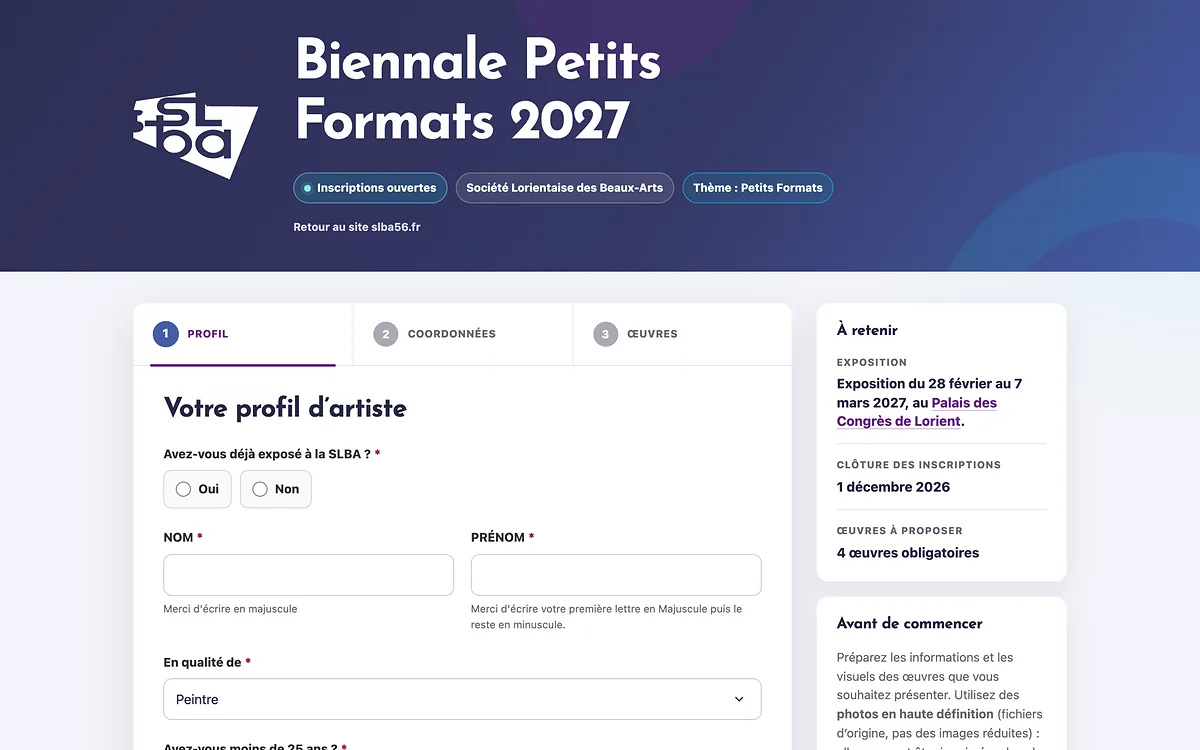
Three steps, and a “Remember” panel that follows the salon’s dates.
The jury has the last word.
Turning a work down for the catalogue also means saying which one you’d rather have.
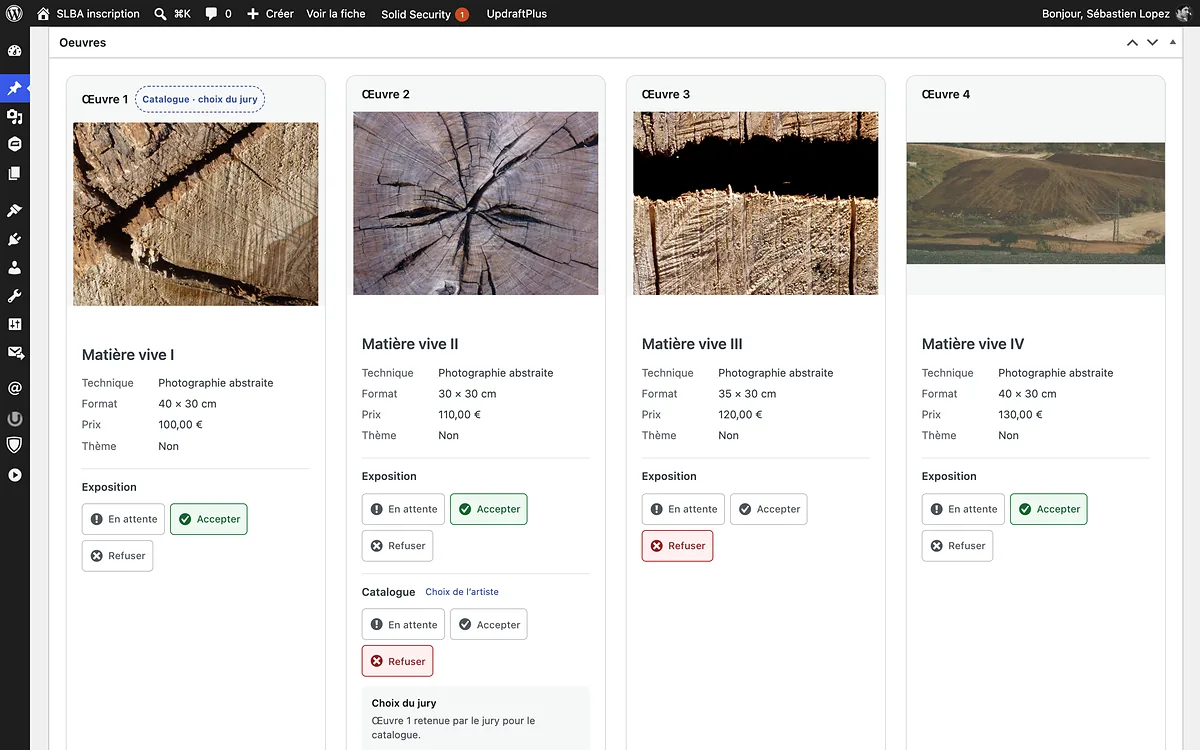
The jury judges each work large, in a window sized to the screen: the image on the left, the exhibition decision on the right, arrows to move on. When the work is the one the artist chose for the catalogue, a footer appears. If the jury turns it down, it picks the replacement among the works accepted for the exhibition; the others stay visible, greyed out, with the reason. The decision email follows suit: “the jury finally chose this work over the one you had proposed.” One work per artist in the catalogue, and the code refuses to count two.
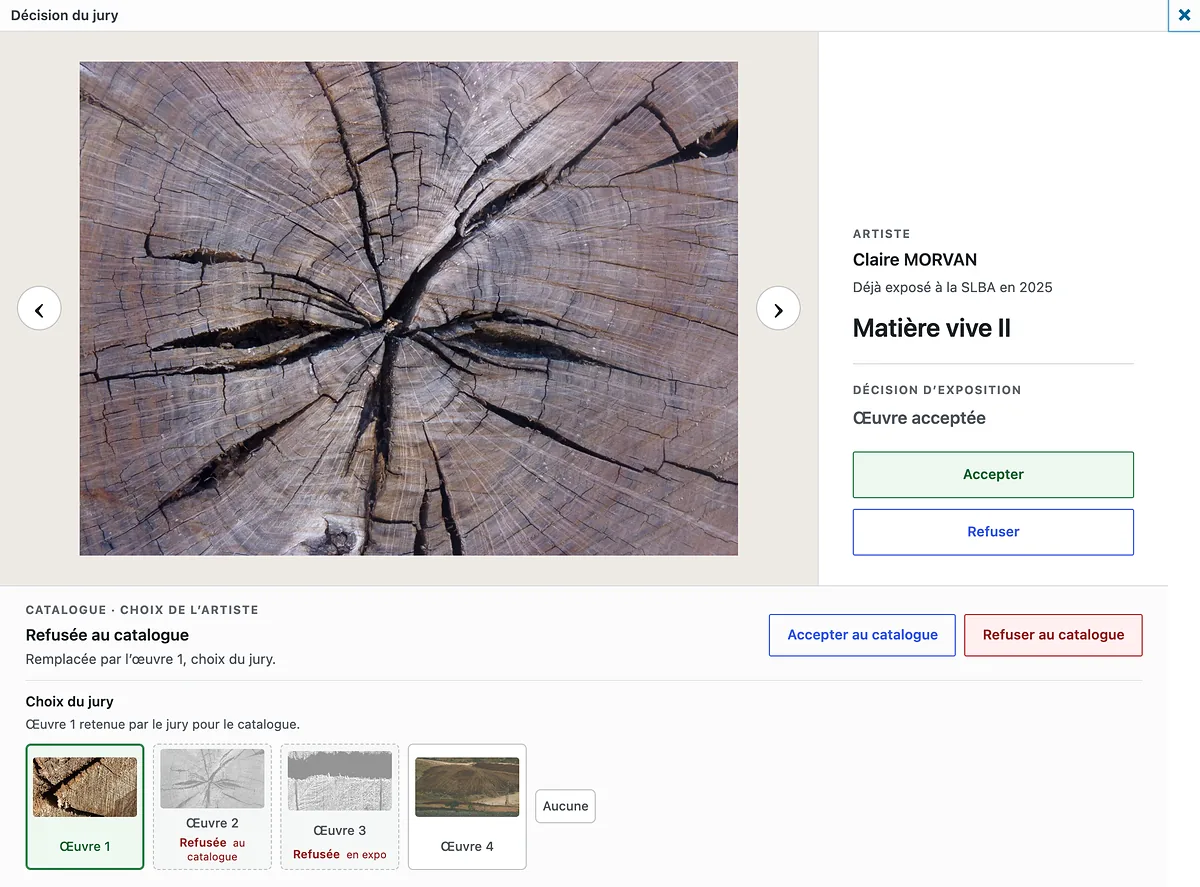
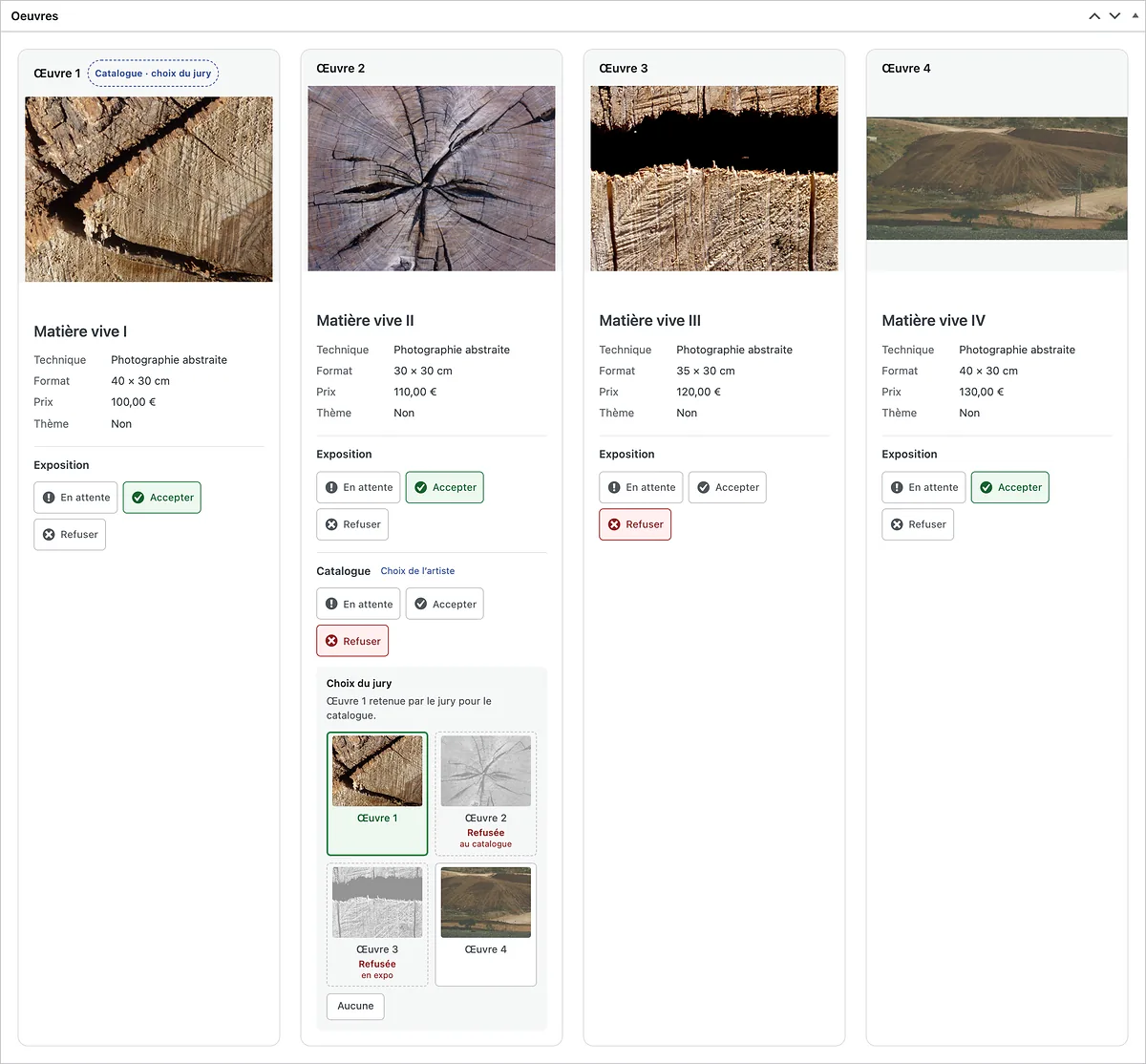
Captured on fictional records, September 2026. No real artist data.
A record at a glance.
The secretary should never have to open a record to know what’s in it.
Every record carries a cockpit: the artist’s discipline, the four works framed by their decision, the work headed for the catalogue, what is still owed under this edition’s rules, the date the email went out. The list of records says the same thing in columns, with a “To do” filter that isolates decisions to send and catalogues to complete, and the dashboard follows the campaign: registered, judged, notified, collected. A single function computes a record’s state, and all three screens read it. They can’t contradict each other.
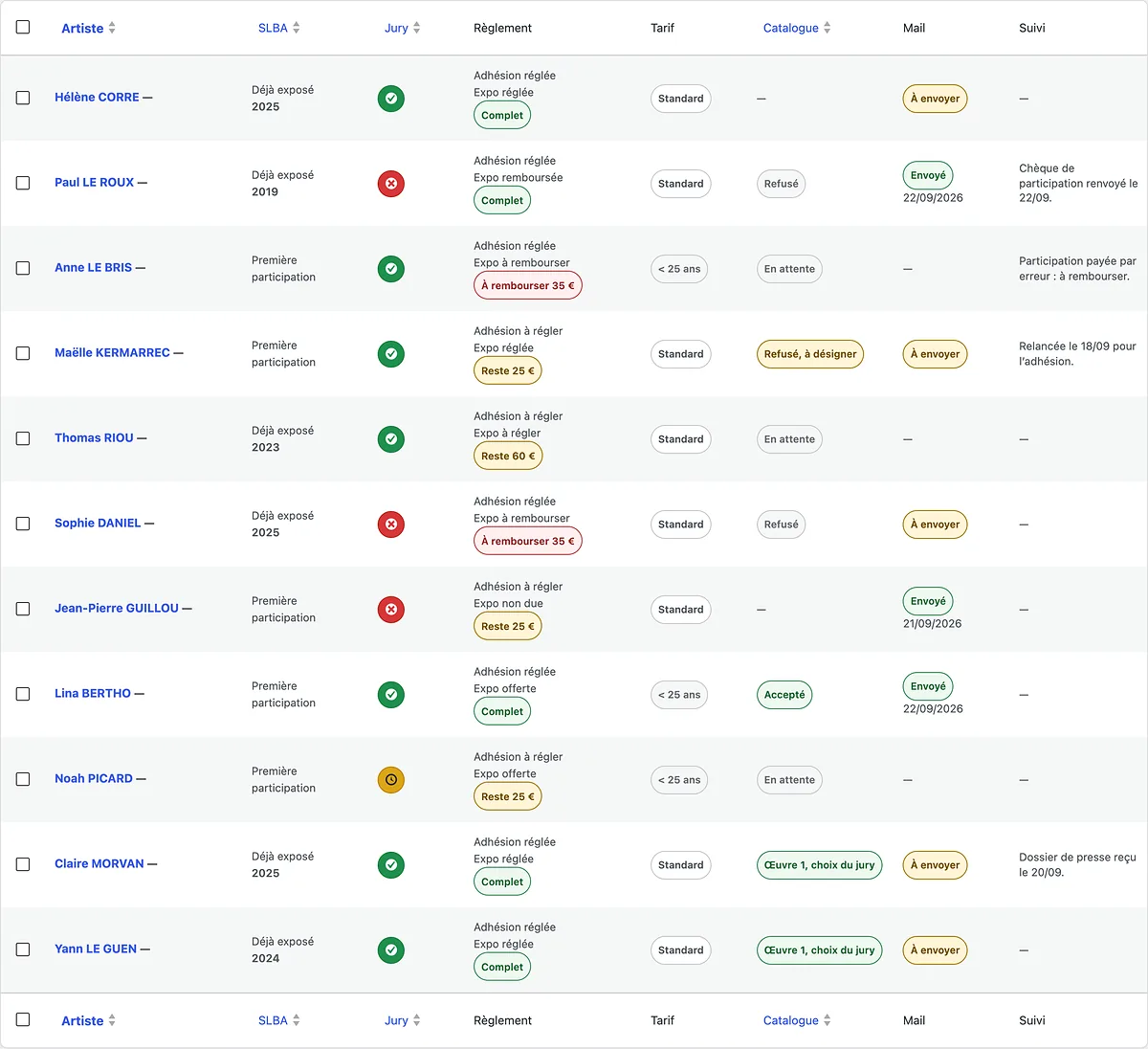
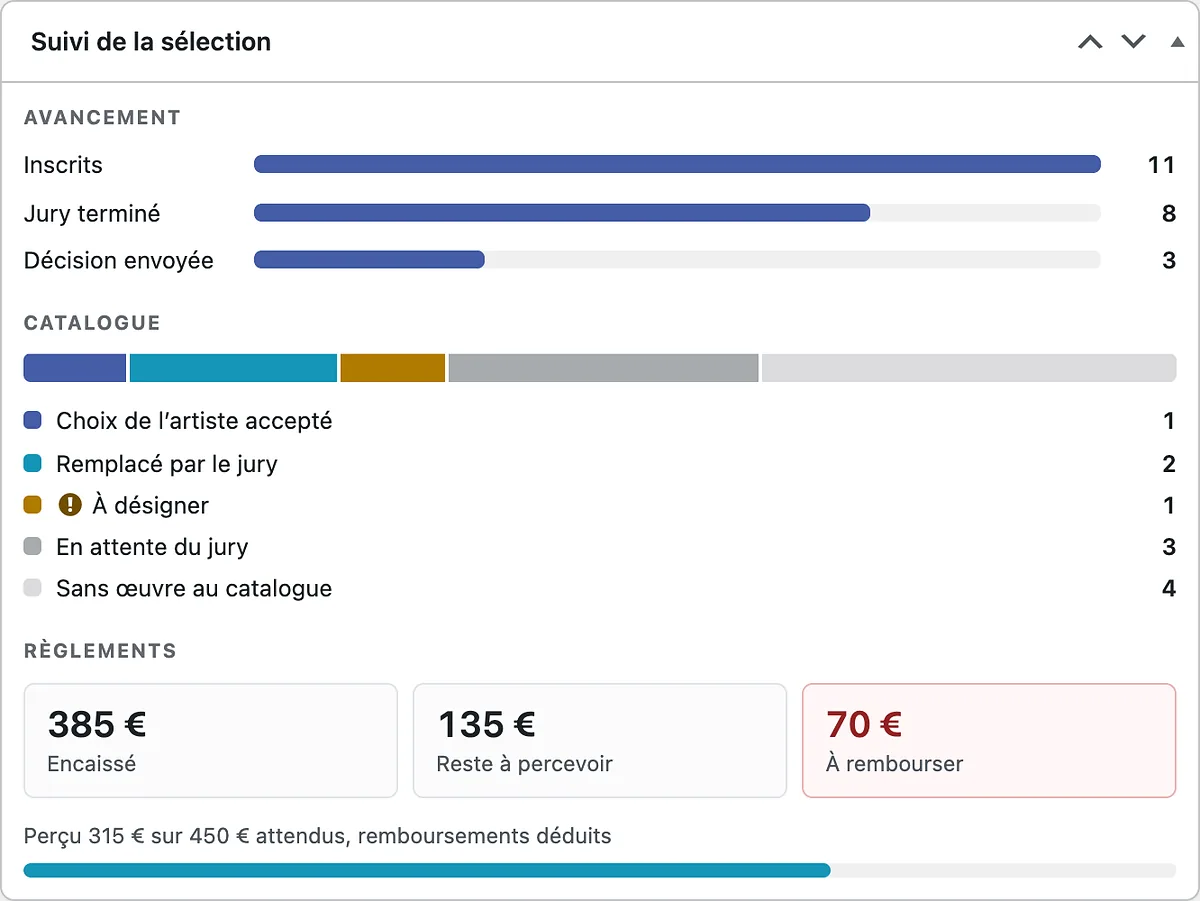
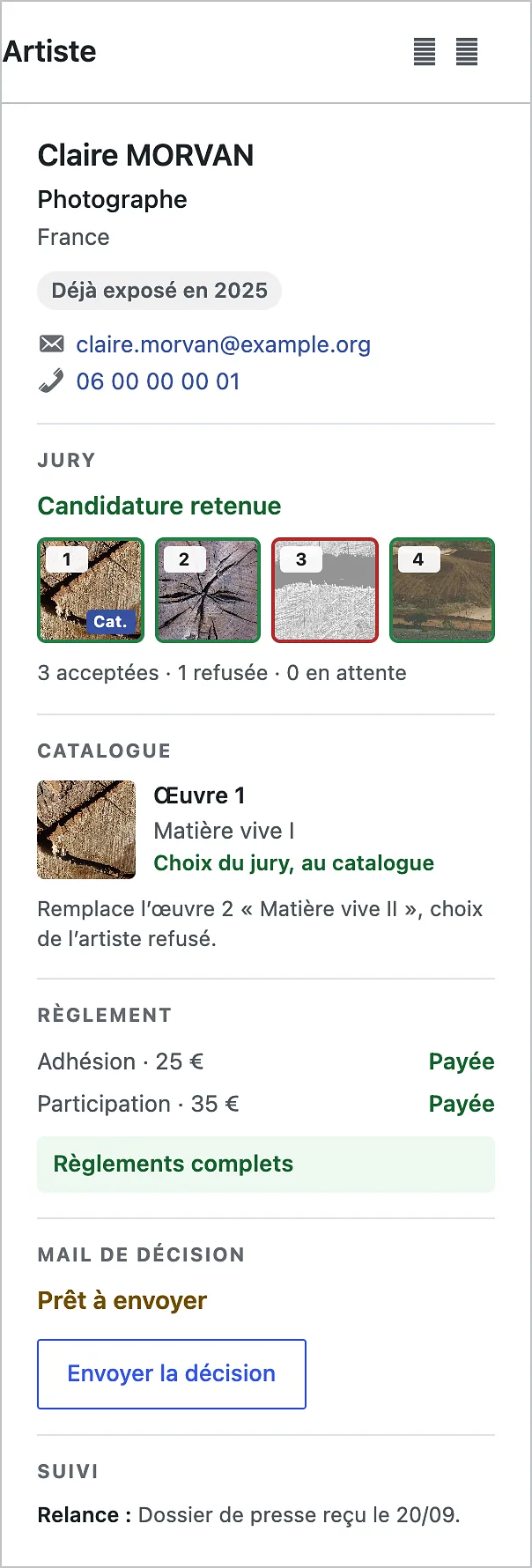
The list, a record’s cockpit, and the selection tracker on the dashboard.
Nothing left to retype.
The catalogue is laid out by a designer who has never seen the back office.
She used to get three pages to print and an archive of images named by the artists themselves, and had to copy everything across. Now one button builds her a pack: a data merge file in tab-delimited Unicode text that older versions of InDesign can read, the high-resolution images renamed in alphabetical order, and an instructions page that lists what still needs sorting before layout.
In InDesign, she drops her fields on a master page and runs the merge: names, titles, techniques and photos place themselves, thanks to the @Image field. The feature has been there for over twenty years. It only needed the right file.
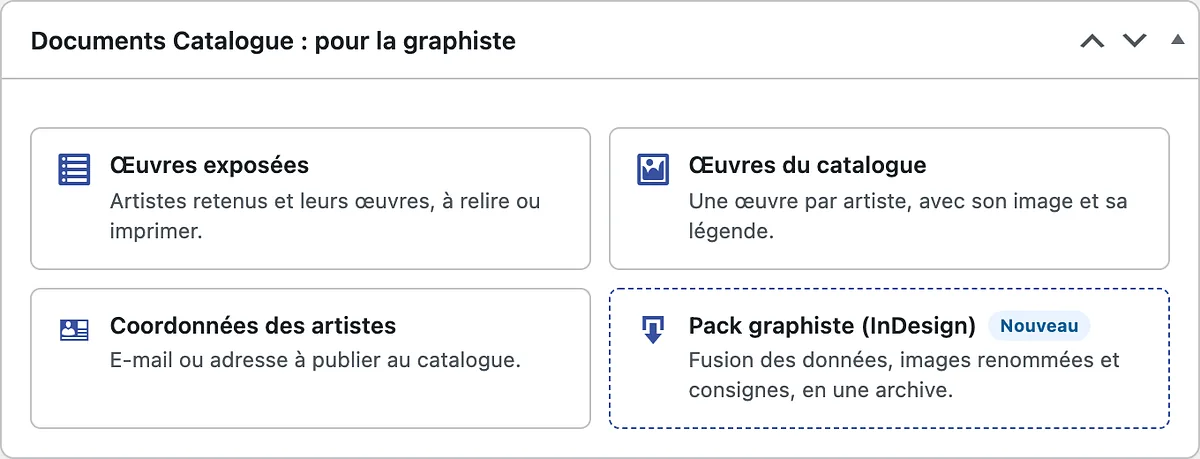
Four documents for the designer. The pack, dashed, is the new one.
A back office is judged on a selection night, when the secretary closes the laptop without having needed to write to me.
Project note, September 2026